Secure AI
Deploy generative AI with ironclad governance
Built on a 15-year, battle-tested data fabric, 3forge isolates AI-generated code and enforces institutional compliance with zero credential exposure.
A governed path to production
Production AI needs enforceable boundaries
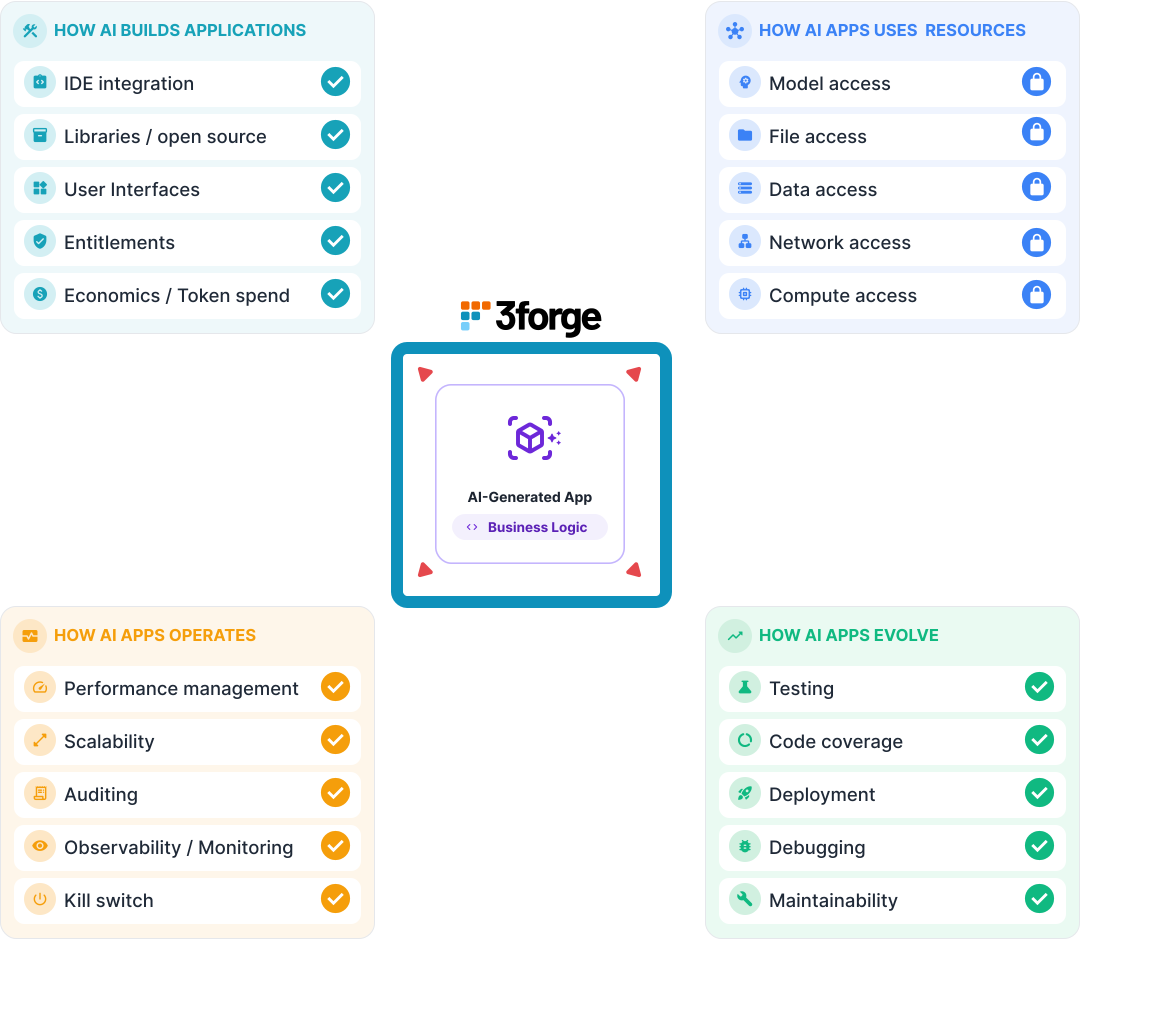
AI-generated code is safe to deploy only when the runtime, not the code, decides what it can reach. 3forge supplies the production layers AI would otherwise build, enforces their use, and controls what every application can access and do. Compliance clearance becomes business logic clearance. Reviewers sign off on the logic, not the plumbing.
Why 3forge
Everything AI needs to build. Everything you need to trust it.
3forge is a complete system to safely build and run software with AI. The difference shows in seven ways.
Institutional compliance, enforced from within
- Controls inside the app, not fenced around it
- Libraries, reach and execution constrained by the runtime
- No credential ever handed to generated code
- Same limits from development to production
Your platforms stay where they are
- No re-platforming, no lakehouse at the center
- Governs apps across the systems already in production
- Feeds, databases, APIs and history stores stay in place
- Existing controls keep applying
A system, not an assembly of services
- One environment: governed runtime, data fabric, application engine
- No stitching together IAM, VPC, container and agent services
- Governance from day one, not bolted on at deployment
- Shared tuning, scaling, testing, code coverage and release for every project
Built-in components cut the cost of every project
- 95% of a workflow already ships as components
- Integration, persistence, grids, pivots, charts, forms, entitlements
- The model assembles proven parts instead of writing from scratch
- Fewer tokens, fewer bugs, less code to maintain
Every action attributable, every refusal recorded
- Audit built into the platform, not left to each app
- Execution, data access, latency and throughput measured continuously
- Every agent call logged by agent, tool and operation
- Rejected calls never reach the deployment, and stay on record
One console for every instance you run
- Every instance cataloged, monitored and licensed
- Production and non-production alike
- Central control of AI access
- A kill switch on any application
Speed that is measured, not claimed
- 2M+ operations a second, under 100 microseconds, in memory
- Petabyte history of trillions of rows, in the same SQL
- Front end independently benchmarked by STAC at 700,000 field updates a second
- Built for interactive workloads, not batch
Ways to access AI
Three ways AI is exposed
AI works directly inside your live deployment, querying, building and operating applications. Each surface answers two questions differently: who calls the model, and whether it can act on 3forge.
Surface 01
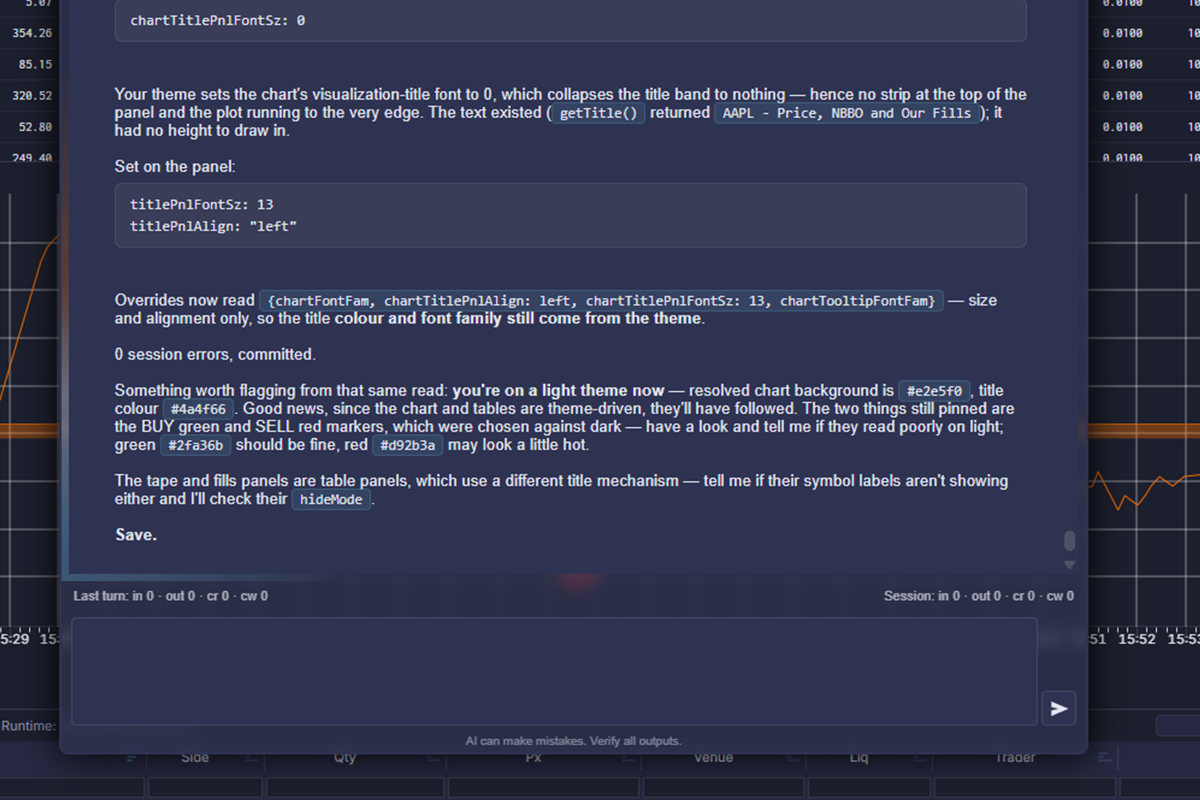
3forge Agent, in the browser
- An assistant embedded in 3forge Web
- Builds, queries and debugs dashboards in conversation
- Sees the user's layout, acts under the user's entitlements
Surface 02
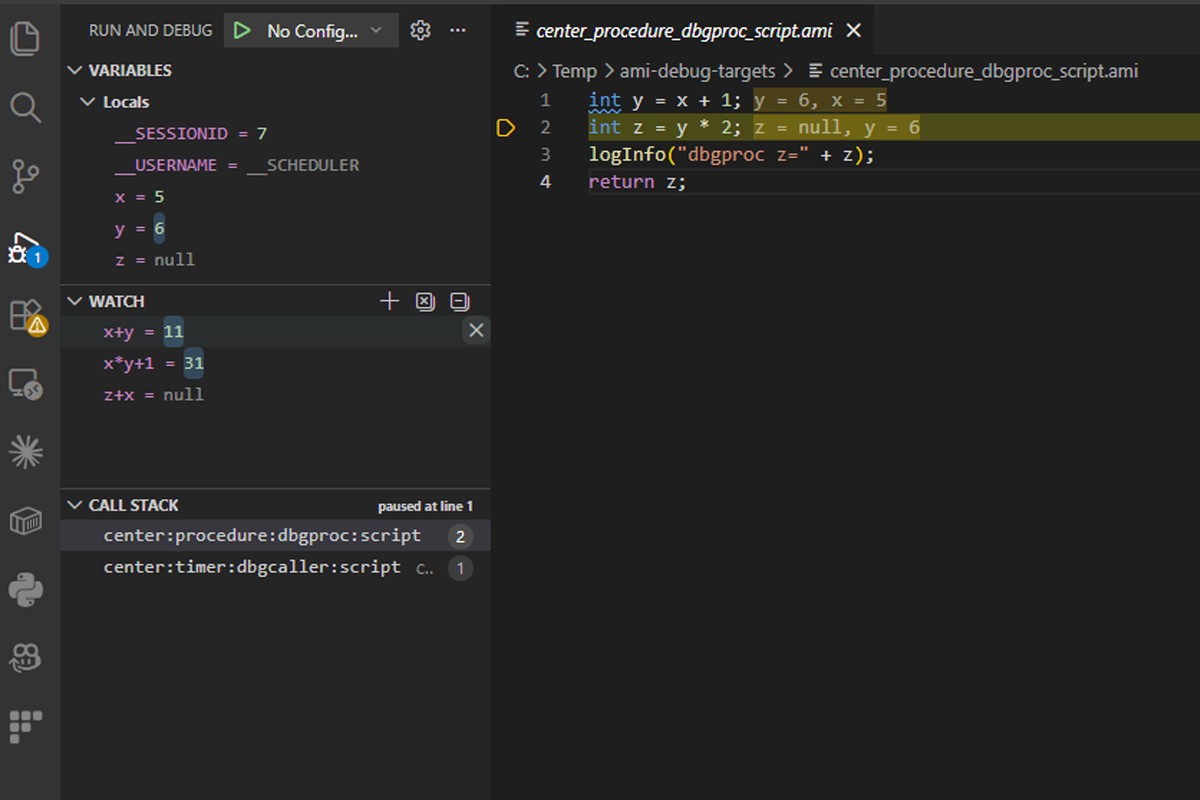
AI agent access, through MCP
- External AI clients operate a running instance through governed tools
- They discover what the runtime offers, with no integration to each system behind it
- For coding tools, IDEs and external automation, including the 3forge Plugin
Surface 03
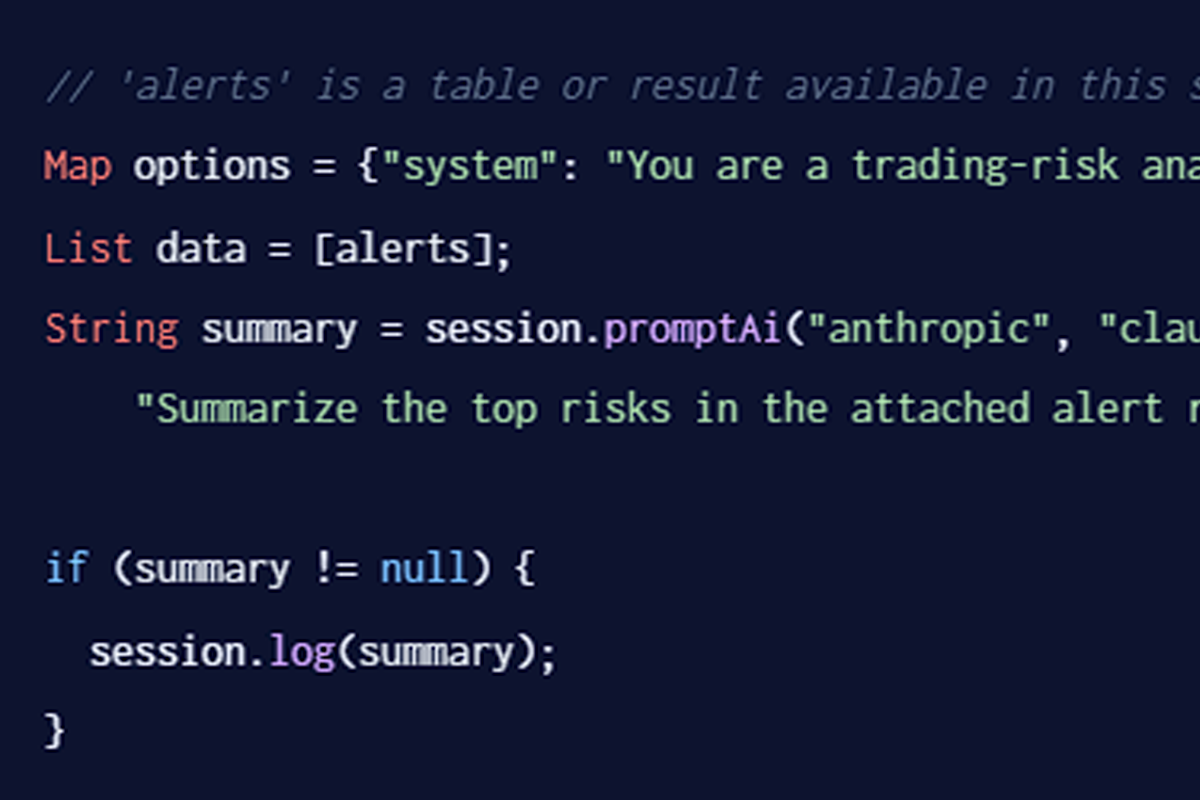
AI in your application logic, with AmiScript
- A model invoked from any callback or timer
- Classifies, summarizes or extracts insight from live, filtered data
- A single, tightly scoped call, running where the data already lives
Production discipline
A complete lifecycle for creating enterprise systems
AI makes code fast to write. It does not make that code fit for production. 3forge brings the same engineering discipline to every application, whether a person or an agent wrote it.

- Build on prebuilt, certified components, with IDE integration and an inline debugger
- Test with unit testing and code coverage in the standard process
- Review the business logic, not the plumbing
- Release through one process from development to production, under the same limits
- Operate with performance tuning, scalability management and monitoring for every instance
- Audit every action, with a kill switch on any application
That is what separates a pilot from production.
Partnering for success
It's time to industrialize AI deployment
As expectations rise and regulatory scrutiny intensifies, the challenge is no longer building AI prototypes but turning them into production systems. 3forge already helps some of the largest financial institutions deploy generative AI safely and at scale.