Application and User State
Web Managers
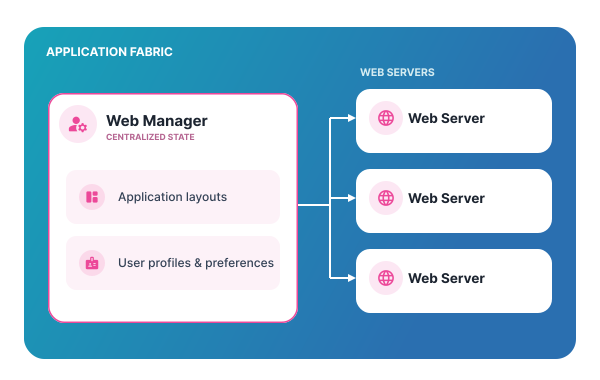
Web Managers hold the layouts, profiles and preferences that every Web Server in the estate serves from.
Function inside the fabric
State that outlives the session
A single Web Server can hold the layouts and preferences its own applications need. Across several Web Servers, holding those records on each node fragments the user experience and makes nodes harder to replace or scale.
Web Managers centralize that state. They hold application layouts, user profiles and preferences, and supply them to whichever Web Server is handling a given session, so persistent configuration is independent of the node that serves the request.
Capabilities
What a Web Manager holds
Application definitions
- Application layouts
- Application configuration
- One definition per application
User profiles and preferences
- User profiles
- Personal preferences
- Dashboard settings per user
Continuity across nodes
- Shared state across Web Servers
- Nodes added, replaced or maintained freely
- No configuration estate per machine
Where it matters
Scaled and distributed estates
A user's dashboard settings are the same whichever server handles the session, and application teams maintain one set of layout definitions instead of synchronizing files by hand across every Web instance.
The Web Servers deliver the live sessions. The Web Manager preserves the profiles, preferences and application definitions those sessions require.
Horizontal Scaling
The Manager holds the state. The Balancer decides which server serves it.
Routing users across a Web tier that grows by adding nodes.